The FDA Breakthrough Device Roadmap – From Prototype to Patient Access
June 4, 2026
The FDA’s Breakthrough Designation Devices (BDD) Program, established under the 21st Century Cures Act and launched in 2018, is designed to accelerate the development and review of medical devices that may offer more effective diagnosis or treatment for life-threatening or irreversibly debilitating conditions.
As of December 2025, the FDA has granted over 1,200 BDDs, yet only around 185 devices have reached market authorization under the program. This highlights a critical reality: securing Breakthrough status is only one step in a much more complex regulatory and evidence journey.
For MedTech companies, the challenge is no longer just innovation. It is translating early scientific promise into a credible clinical, regulatory, and commercialization strategy that can withstand FDA review. Many designation requests fail not because the technology lacks potential, but because they fall short on clinical differentiation, evidence quality, or regulatory clarity.
Understanding the FDA Breakthrough Devices Program
The FDA BDD Program is a voluntary program intended for certain medical devices and device-led combination products. To qualify, a device must demonstrate the potential to provide more effective treatment or diagnosis for serious conditions.
The primary objective of the program is to:
- Accelerate patient access to innovative technologies
- Improve communication between sponsors and FDA reviewers
- Reduce unnecessary development delays
- Support for more efficient clinical study design
- Prioritize FDA review timelines for eligible submissions
Importantly, BDD does not guarantee FDA approval and clearance. Instead, it enables earlier and more frequent regulatory interaction, along with prioritized review throughout the development lifecycle.
Devices eligible for BDD may pursue market authorization through:
- Premarket Approval (PMA)
- De Novo Classification
- 510(k) route
The designation is especially valuable for companies developing first-in-class technologies where regulatory expectations may be less defined, and development risk is higher.
Criteria for Breakthrough Device Designation
To receive BDD, a device must satisfy two core statutory criteria.
Criterion 1: Serious Disease or Condition
The device must provide the potential for more effective treatment or diagnosis of a:
- Life-threatening disease, or
- Irreversibly debilitating condition
Examples include:
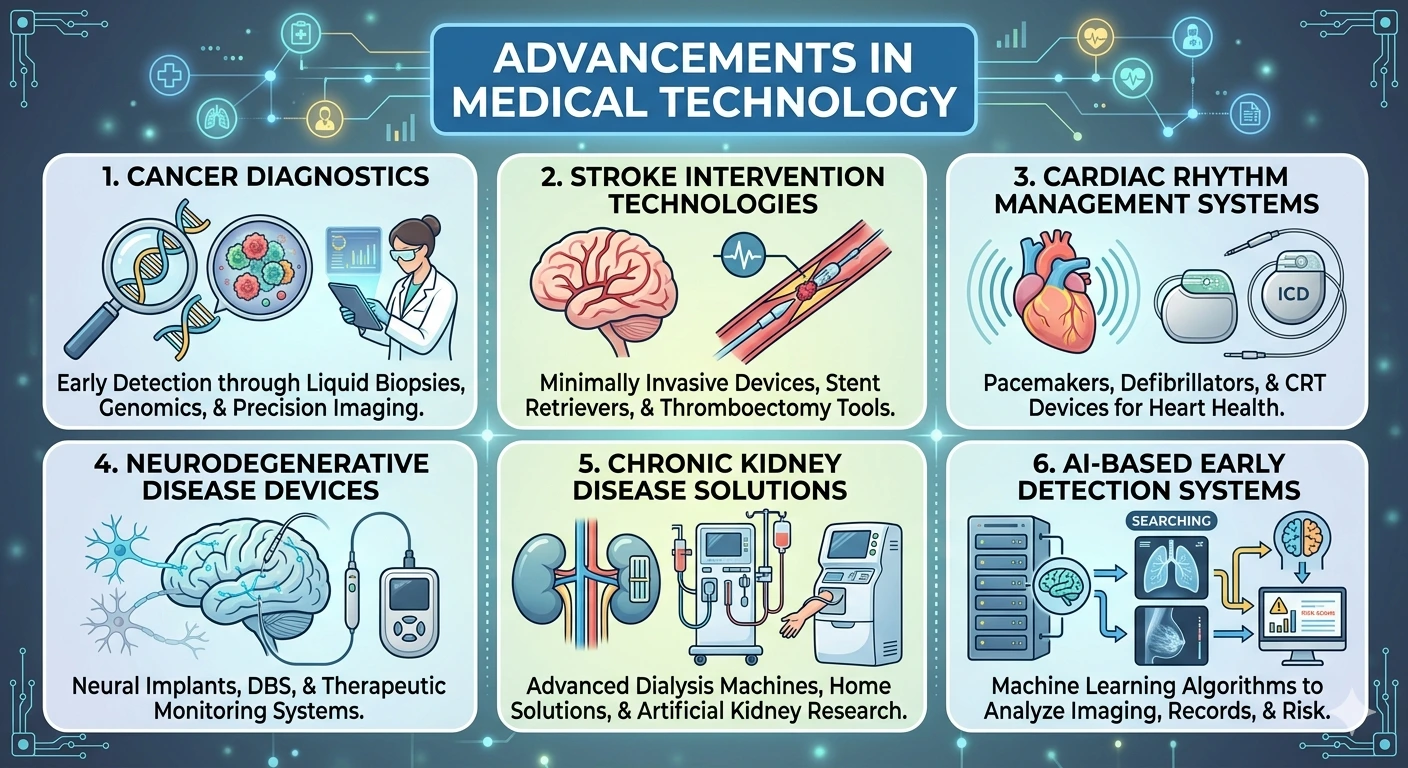
The FDA evaluates whether the condition significantly impacts survival, day-to-day functioning, or irreversible morbidity.
Criterion 2: At Least One Additional Requirement must be met:
- Represents Breakthrough Technology
- No Approved or Cleared Alternatives Exist
- Offers Significant Advantages Over Existing Alternatives
Demonstrate Device Availability is in the Best Interest of Patients
Data Requirements for BDD Applications
One of the most misunderstood aspects of BDD is the level of evidence required.
Contrary to common startup assumptions, the FDA does not require complete pivotal clinical trial data at the designation stage. However, the agency does expect credible scientific evidence supporting the device’s breakthrough potential.
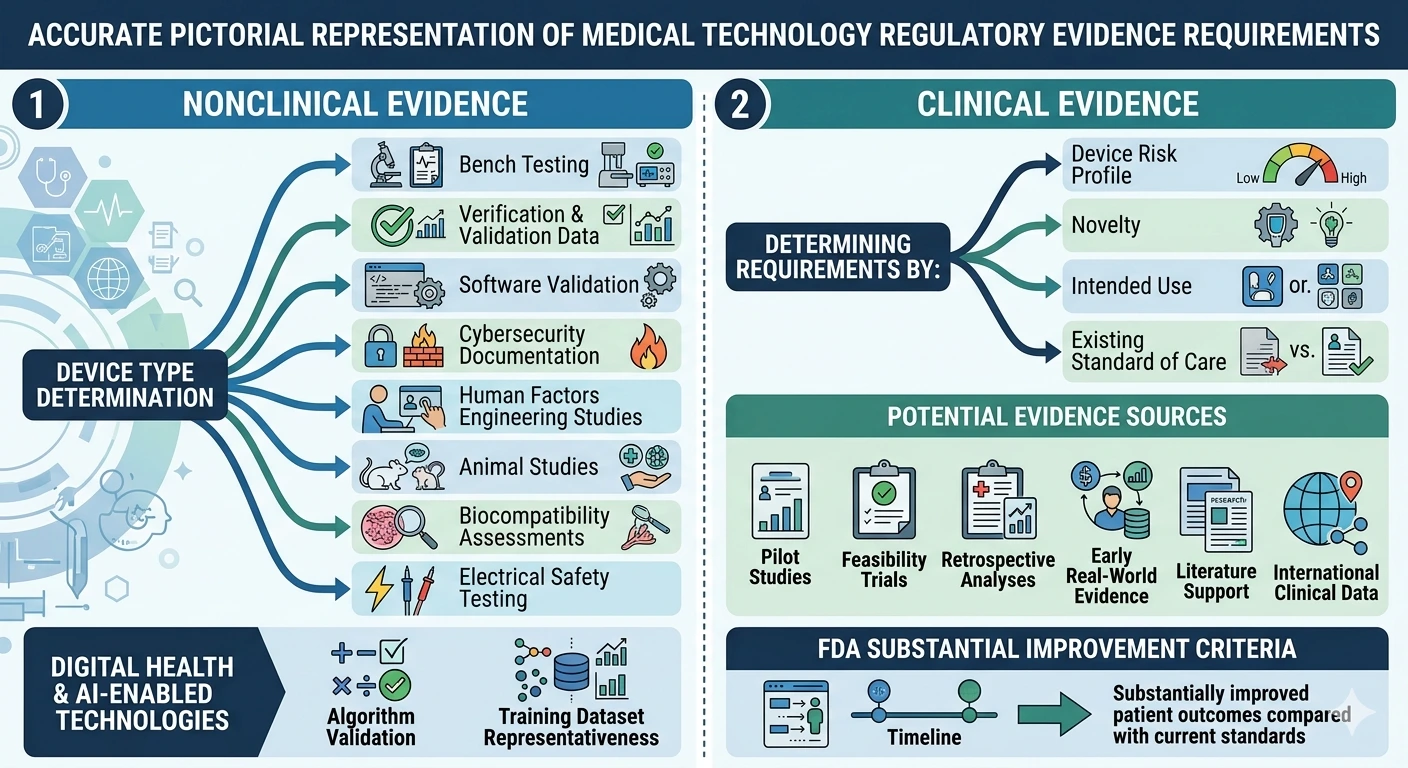
Quality of Evidence Matters More Than Quantity
A small but well-designed feasibility study may be more persuasive than large uncontrolled datasets. FDA reviewers evaluate:
- Clinical relevance
- Statistical validity
- Endpoint appropriateness
- Bias mitigation
- Patient selection criteria
- Comparator rationale
Weak clinical justification remains one of the leading causes of designation denial.
Designation to Authorization- The Breakthrough Device Trends
Since its launch, the Breakthrough Devices Program has experienced rapid growth across multiple therapeutic categories.
As of December 31, 2025, the FDA had granted 1,246 BDDs and authorized 185 devices under the program for commercialization. These figures include devices previously designated under the precursor Expedited Access Pathway (EAP) program.
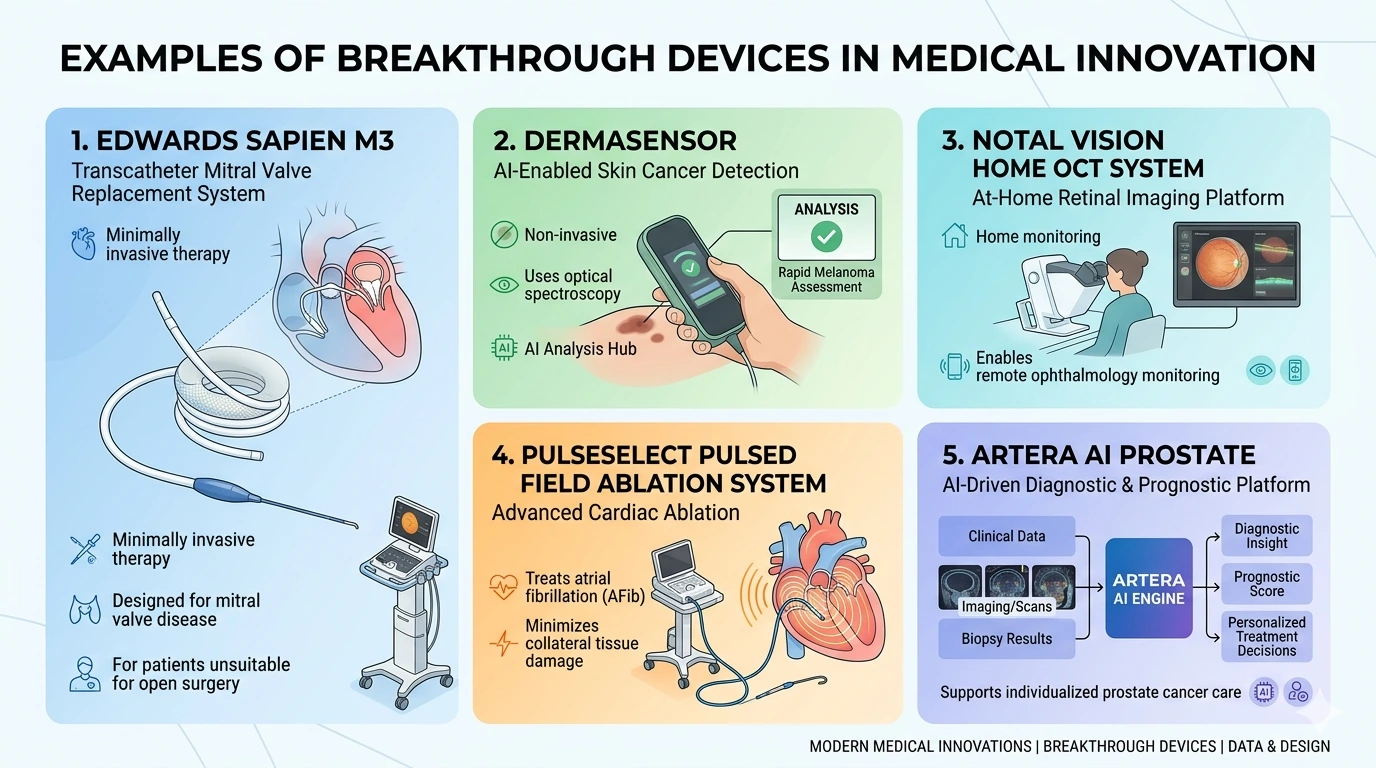
These trends demonstrate that BDD increasingly supports:
- AI and software-driven technologies
- Remote patient monitoring
- Personalized medicine
- Robotics
- Structural heart therapies
- Digital diagnostics
BDD Review Dynamics
The FDA does not publicly disclose formal grant-versus-denial rates for BDD requests. However, designation outcomes are strongly influenced by several recurring factors. Companies that engage early with the FDA through pre-submission interactions are often better positioned to align their evidence-generation and development plans with agency expectations.
Common Reasons for BDD Denial
BDD requests may be denied when sponsors are unable to adequately demonstrate that the device meets FDA eligibility criteria or when the supporting evidence is insufficient.
- Insufficient Clinical Differentiation: Many applications fail to demonstrate a clinically meaningful advantage over existing technologies or standard-of-care approaches. Technological novelty alone is insufficient without a clear potential patient benefit.
- Weak Evidence Package: Common deficiencies include limited clinical data, underpowered studies, poorly defined endpoints, incomplete validation testing, lack of comparator rationale, or insufficient usability and human factors data.
- Overstated Breakthrough Claims: Some submissions position incremental improvements as transformative innovation without sufficient clinical justification. FDA reviewers assess whether the technology meaningfully addresses an unmet clinical need or offers a substantial improvement over available alternatives.
- Unclear Regulatory Strategy: Applications may be weakened by a lack of clarity around intended use, device classification, predicate considerations, or the anticipated regulatory pathway, including PMA, De Novo, or 510(k) approaches.
Failure to Address Existing Alternatives: When legally marketed alternatives exist, sponsors are expected to clearly explain how the device may provide a more effective diagnostic or therapeutic option for patients.
BDD Submission Format and User Fee Structure
A BDD request to the FDA should include crucial information such as device description, intended use, the specific BDD eligibility criteria being claimed, and supporting data.
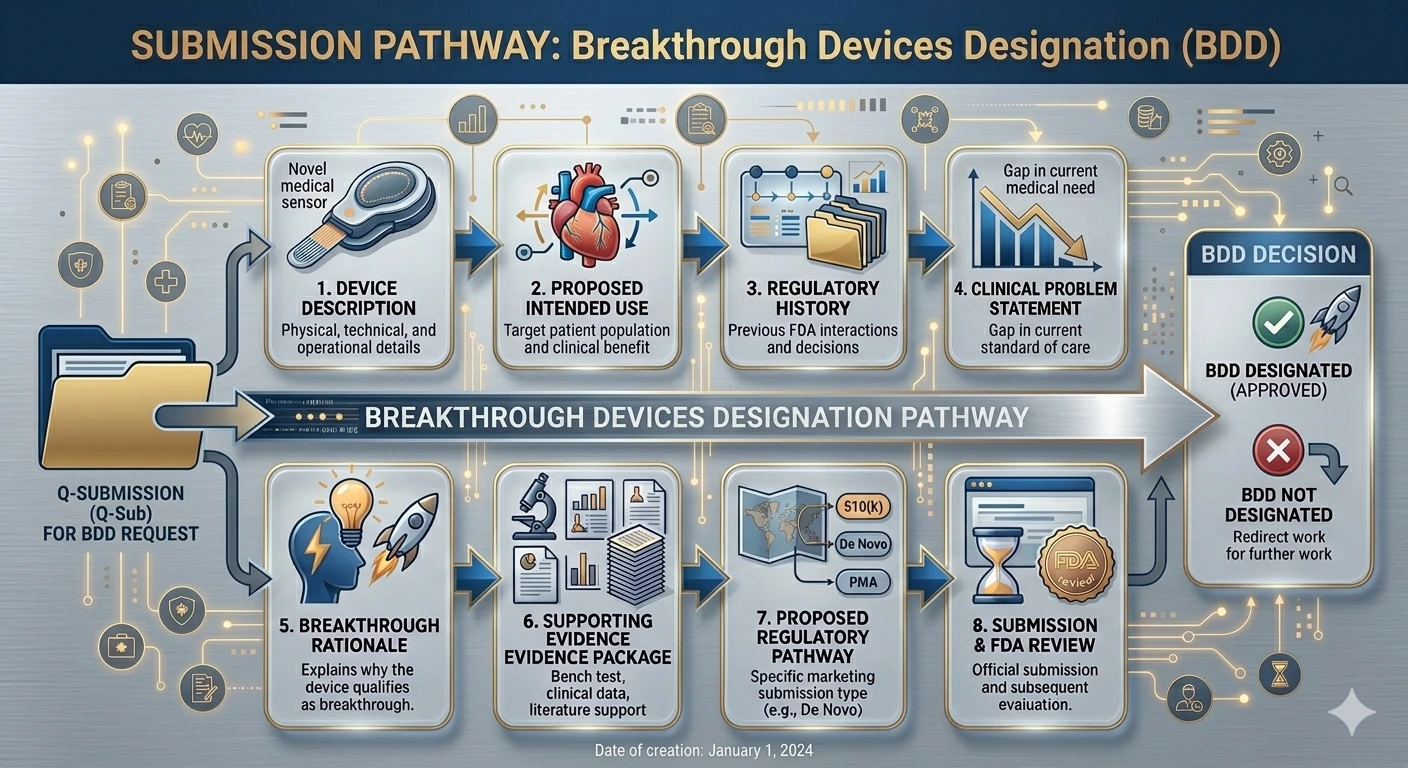
It is recommended that the designation request be submitted as a standalone submission, rather than combined with other Q-Sub interactions. The FDA aims to request additional information within 30 days and issue a decision within 60 calendar days. Timely and complete sponsor responses are critical to maintaining review timelines.
Importantly, there is currently no separate FDA user fee for obtaining Breakthrough Device Designation. For venture-backed startups and early-stage innovators, the absence of a dedicated BDD fee makes the program highly attractive.
Commercial Impact for MedTech Companies
For sponsors, BDD functions as a commercial tool to protect capital and maximize corporate valuation.
- Prevents Wasted R&D Spend: Locking in clinical endpoints early prevents the financial catastrophe of running a pivotal study that fails to meet regulatory expectations.
- Extends Cash Runway: Prioritized review shortens the pre-revenue burn window, getting the device to market—and cash-generation—faster.
- Lowers Cost of Capital: Serves as a zero-cost, objective validation stamp that lowers perceived risk for institutional investors, boosting valuation during funding rounds.
- Elevates Takeover Premium: Creates a predictable regulatory roadmap that makes the asset highly attractive to strategic buyers looking for a clean, de-risked acquisition.
- Accelerates Time-to-Payment: Early regulatory clarity allows teams to build parallel reimbursement and insurance coverage strategies, avoiding post-clearance revenue stalls.
Bottomline- BDD converts regulatory velocity into measurable corporate equity and a distinct competitive advantage.
Comparable Accelerated Programs in Global Markets
The U.S. FDA’s Breakthrough Devices Program is widely regarded as one of the most mature and structured accelerated regulatory pathways for medical devices globally.
Several major jurisdictions have introduced innovation-focused pathways with similar objectives. However, most differ from the FDA model in terms of regulatory centralization, scope, and implementation structure.
|
Jurisdiction |
Program |
Similarities to FDA BDD program |
Key Differences from FDA BDD program |
|
European Union (EU) |
Breakthrough and Innovation (BtX) Pilot Framework |
Supports early scientific engagement and innovation-focused regulatory interaction for novel devices |
The EU does not currently operate a single centralized accelerated authorization pathway equivalent to the FDA BDP. Oversight remains decentralized, involving multiple notified bodies and Member States under the MDR framework |
|
Japan |
Sakigake Designation System (PMDA) |
Provides prioritized consultation and accelerated review for innovative technologies |
Places greater emphasis on products first developed in Japan or introduced early into the Japanese market |
|
United Kingdom |
Innovative Devices Access Pathway (IDAP) |
Aims to accelerate patient access to transformative medical technologies through coordinated engagement |
Functions as a broader access and adoption framework involving regulatory, reimbursement, and health system coordination, rather than a purely regulatory acceleration pathway |
|
China |
Special Review Procedures for Innovative Medical Devices (NMPA) |
Includes priority review, accelerated communication, and shortened review timelines for qualifying devices |
More closely aligned with domestic MedTech innovation and industrial policy objectives, particularly in support of locally developed technologies |
Conclusion
The FDA Breakthrough Devices Program has become a major strategic pathway for innovative medical technologies in the U.S. Beyond facilitating earlier and more efficient regulatory engagement. The program can help companies accelerate clinical development, improve investor confidence, and support earlier patient access.
Successful designation depends not only on technological innovation, but also on demonstrating meaningful clinical value and a credible regulatory strategy. As regulatory expectations evolve, especially for AI-enabled devices, cybersecurity, and real-world evidence, early and proactive FDA engagement will remain increasingly important for MedTech innovators.
Insights from the MedTech Guru
Q: Does Breakthrough Device Designation guarantee FDA approval or clearance?
A: No. The program does not lower FDA standards for safety or effectiveness. Instead, it is designed to facilitate earlier engagement and a more efficient review process.
Q: Is clinical data always required at the designation stage?
A: Not necessarily. In some cases, non-clinical or preliminary evidence may be sufficient if it credibly supports the device’s potential clinical benefit.
Q: What does the FDA evaluate most closely in designation requests?
A: The FDA primarily evaluates whether the device addresses a serious condition and whether it has the potential to provide more effective diagnosis or treatment compared with existing alternatives.
Upcoming Events – June-July 2026
MedTech Summit 2026. June 15-18, 2026, Berlin, Germany.
Global MedTech regulatory conference focused on EU MDR, clinical evaluations, SaMD, AI, post-market surveillance, reimbursement, and global market access. Informa Connect
LSI Asia Emerging Medtech Summit 2026. June 30-July 3, 2026, Singapore.
Investor and MedTech partnering summit focused on emerging medical technologies, venture funding, strategic partnerships, and commercialization. https://www.lsiasiasummit.com/
Medical Technology Germany 2026. July 1-2, 2026, Ulm, Germany.
Trade exhibition focused on medical device design, development, manufacturing, and production technologies. https://www.medicaltechnologygermany.com/
23rd Semi-Annual Medical Device Coverage & Reimbursement Conference. July 15-16, 2026, Chicago, Illinois, USA.
Conference focused on reimbursement, market access, coding, coverage, and payment strategy for medical devices. https://www.q1productions.com/medical-device-industry/
How Can BLA Regulatory Help?
BLA Regulatory, LLC operates as a global regulatory consulting firm specializing in medical device and biopharmaceutical compliance and submission support. With deep experience in U.S. FDA pathways, including IND, NDA, BLA, 510(k), PMA, De Novo, and Breakthrough Device designations, the firm supports sponsors through active agency interactions. Gain deeper insights into the BDD pathway with guidance from our regulatory experts to support a more streamlined FDA and CMS engagement strategy. BLA Regulatory serves clients across the U.S., Europe, China, and Japan, helping bring safe and effective innovations to market with speed and reliability. For more insights, visit: https://bla-regulatory.com/
Stay in Orbit
Subscribe to future issues of MedTech Orbit for practical updates, U.S. FDA device regulations, and smarter compliance strategies, delivered straight to your inbox.