The RAPID Framework - Early FDA–CMS Alignment for Breakthrough Devices
July 1, 2026

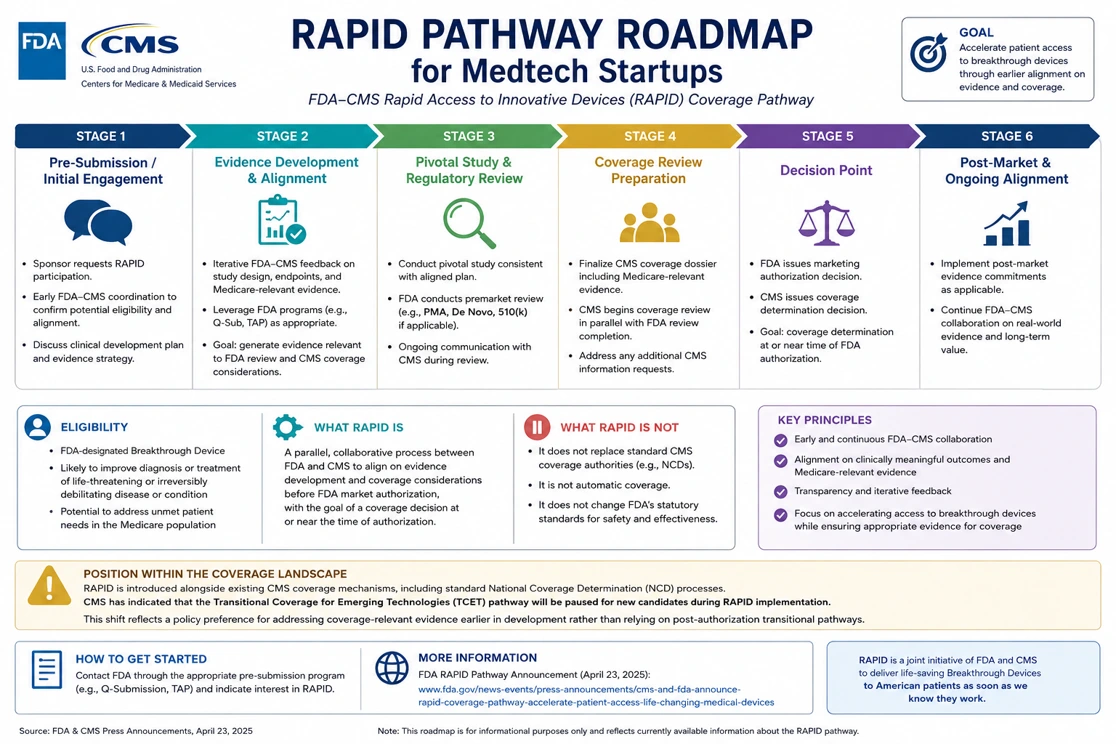
The FDA and CMS recently introduced the RAPID (Regulatory Alignment for Predictable and Immediate Device) pathway to reduce the longstanding delay between device authorization and Medicare coverage.
Traditionally, innovators have navigated two sequential processes, FDA approval followed by CMS reimbursement, often resulting in months of lag. RAPID aims to close this gap by aligning evidence expectations earlier in development and initiating Medicare coverage review at the time of FDA authorization.
For eligible Breakthrough Devices, this could compress the coverage timeline to as little as 60 – 90 days.
The shift has clear implications: reimbursement strategy must now be embedded within clinical development. Trial design, patient populations, and endpoints will need to satisfy both regulatory and coverage requirements from the outset, raising the importance of early cross-functional alignment.
The Policy Context
FDA and CMS operate under distinct statutory mandates. The FDA evaluates whether a device is safe and effective. CMS determines whether it is reasonable and necessary for Medicare beneficiaries. Although both rely on clinical evidence, their frameworks are not identical, and their reviews have traditionally occurred in sequence.
This structure has created a persistent coverage gap between market authorization and reimbursement. In some cases, CMS has required additional analyses or interpreted clinical data differently, extending timelines and creating uncertainty for manufacturers and providers.
RAPID addresses this issue by introducing coordination before pivotal evidence is finalized, than after authorization.
What RAPID Changes
RAPID is a Medicare coverage pathway. It does not modify FDA approval standards or create a new regulatory category. Its role is to coordinate how evidence is developed and evaluated for coverage.
Under this approach, CMS engages with FDA and sponsors during development, particularly in shaping study design and endpoint selection. This allows sponsors to understand, in advance, which outcomes will be relevant for Medicare decision-making.
CMS has also stated that it intends to begin the NCD process on the same day an eligible device receives FDA market authorization. This procedural change is central to reducing delays between approval and coverage.
Reflecting this coordinated approach, FDA Commissioner Marty Makary noted:

Eligibility and Scope
RAPID is limited to devices meeting defined criteria. It applies to technologies that have received FDA Breakthrough Device designation and fall within specific regulatory categories. These include certain Class II devices participating in the FDA Total Product Life Cycle Advisory Program (TAP) and all Class III devices.
Eligibility also depends on how studies are designed. This involves selecting patient populations that reflect Medicare beneficiaries and using endpoints that demonstrate meaningful clinical outcomes, such as survival, reduced hospitalizations, or improved function. This allows sponsors to generate a single body of evidence suitable for both FDA authorization and CMS review.
These requirements focus the pathway on technologies addressing serious conditions and ensure that the resulting evidence is directly applicable to Medicare coverage decisions.
Coverage Timeline
RAPID introduces a more predictable and compressed coverage timeline. CMS has stated that it intends to issue a proposed NCD on the same day an eligible device receives FDA market authorization, followed by the required 30-day public comment period.
A final determination may be issued in approximately two months, depending on the adequacy of the evidence and completion of procedural steps. CMS leadership has described this timeframe as roughly 60 to 90 days from FDA authorization.
CMS Administrator Mehmet Oz described the initiative.

Position Within the Coverage Landscape
CMS has indicated that the Transitional Coverage for Emerging Technologies (TCET) pathway will be paused for new candidates during RAPID implementation. This suggests a meaningful shift in coverage policy priorities.
TCET was structured as a post-authorization pathway to provide transitional Medicare coverage for certain FDA-designated Breakthrough Devices while additional evidence is developed after market entry. Examples include novel cardiovascular implants, neuromodulation systems, focused ultrasound technologies, and some AI-enabled or minimally invasive therapeutic devices.
RAPID, by contrast, reflects a preference for addressing CMS evidence expectations before market entry (during pre-market review), rather than relying on post-market provisional coverage.
What RAPID Means for Innovators
RAPID changes when key strategic decisions must be made. Reimbursement considerations now need to be built into clinical development, rather than addressed after regulatory submission.
The implication is simple: reimbursement is no longer a downstream function.
Trial design becomes central to both approval and coverage outcomes. This requires careful selection of endpoints and patient populations. It also increases the need for coordination across regulatory, clinical, and market access functions, as evidence will directly influence both authorization and coverage timelines.
This may also increase evidentiary expectations, including trial size, endpoints, and Medicare-relevant populations.
In practice, teams that align early can reduce both time-to-coverage and commercial uncertainty.
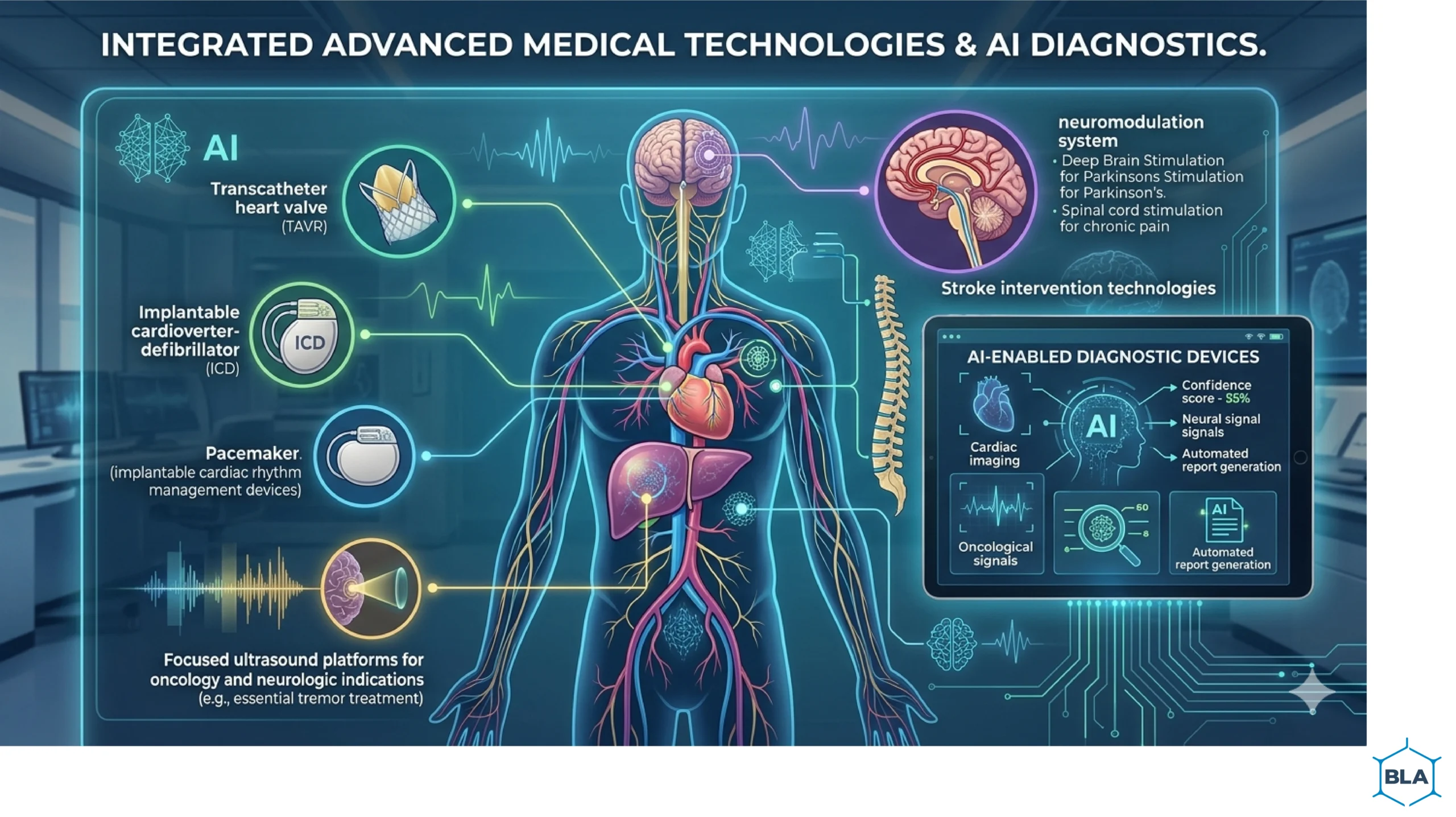
Examples of devices that would likely be well-suited for the RAPID pathway include FDA-designated Breakthrough Devices targeting serious conditions prevalent in Medicare populations and requiring early alignment on coverage evidence. Likely candidates include transcatheter heart valves, implantable cardiac rhythm management devices, neuromodulation systems for Parkinson’s disease or chronic pain, stroke intervention technologies, and focused ultrasound platforms for oncology or neurologic indications.
AI-enabled diagnostic devices with direct implications for treatment decision-making in older adults, such as cancer detection or Alzheimer’s disease assessment tools, could also be strong candidates if they generate clinically meaningful outcomes data relevant to Medicare beneficiaries.
Conclusion
RAPID ultimately signals a broader shift in U.S. device policy: reimbursement readiness is becoming increasingly integrated into product development and regulatory approval.
For breakthrough device sponsors, evidence strategy, regulatory planning, and market access can no longer operate as separate functions.
As FDA Commissioner Marty Makary stated

For sponsors, the implication is clear: alignment early is increasingly essential to achieving both approval and timely coverage.
Insights from the MedTech Guru
Q: Does RAPID change FDA approval requirements?
A: No. RAPID does not modify FDA authorization standards or create a new regulatory pathway. FDA still independently evaluates device safety and effectiveness under existing statutory requirements.
Q: Does RAPID guarantee Medicare coverage?
A: No. CMS retains independent authority over National Coverage Determinations (NCDs). Devices must still meet Medicare’s “reasonable and necessary” standard based on the available evidence.
Q: RAPID is mainly relevant for large MedTech companies.
A: Startups may benefit significantly because reimbursement uncertainty often creates greater commercialization risk for early-stage companies.
Upcoming Events – August 2026
India Health 2026. August 21–23, 2026, Hall 6, Bharat Mandapam, New Delhi.
Leading healthcare exhibition and conference presented by Informa Connect and the organizers of WHX Dubai (formerly Arab Health), focused on healthcare innovation, medical technologies, industry trends, strategic insights, networking, collaboration, and advancing healthcare through global partnerships and knowledge exchange. India Health 2026
MEDevice Boston 2026. August 26–27, 2026, Thomas M. Menino Convention and Exhibition Center, Boston.
Premier medical device industry event focused on device design, development, manufacturing, quality, regulatory affairs, MedTech innovation, product commercialization, supply chain solutions, and networking among engineers, executives, startups, and industry leaders across the medical technology ecosystem. MEDevice Boston 2026
How Can BLA Regulatory Help?
BLA Regulatory, LLC operates as a global regulatory consulting firm specializing in medical device and biopharmaceutical compliance and submission support. With deep experience in U.S. FDA pathways, including IND, NDA, BLA, 510(k), PMA, De Novo, and Breakthrough Device designations, the firm supports sponsors through active agency interactions. Gain deeper insights into the RAPID pathway with guidance from our regulatory experts to support a more streamlined FDA and CMS engagement strategy. BLA Regulatory serves clients across the U.S., Europe, China, and Japan, helping bring safe and effective innovations to market with speed and reliability. For more insights, visit: https://bla-regulatory.com/
Stay in Orbit
Subscribe to future issues of MedTech Orbit for practical updates, U.S. FDA device regulations, and smarter compliance strategies, delivered straight to your inbox.